
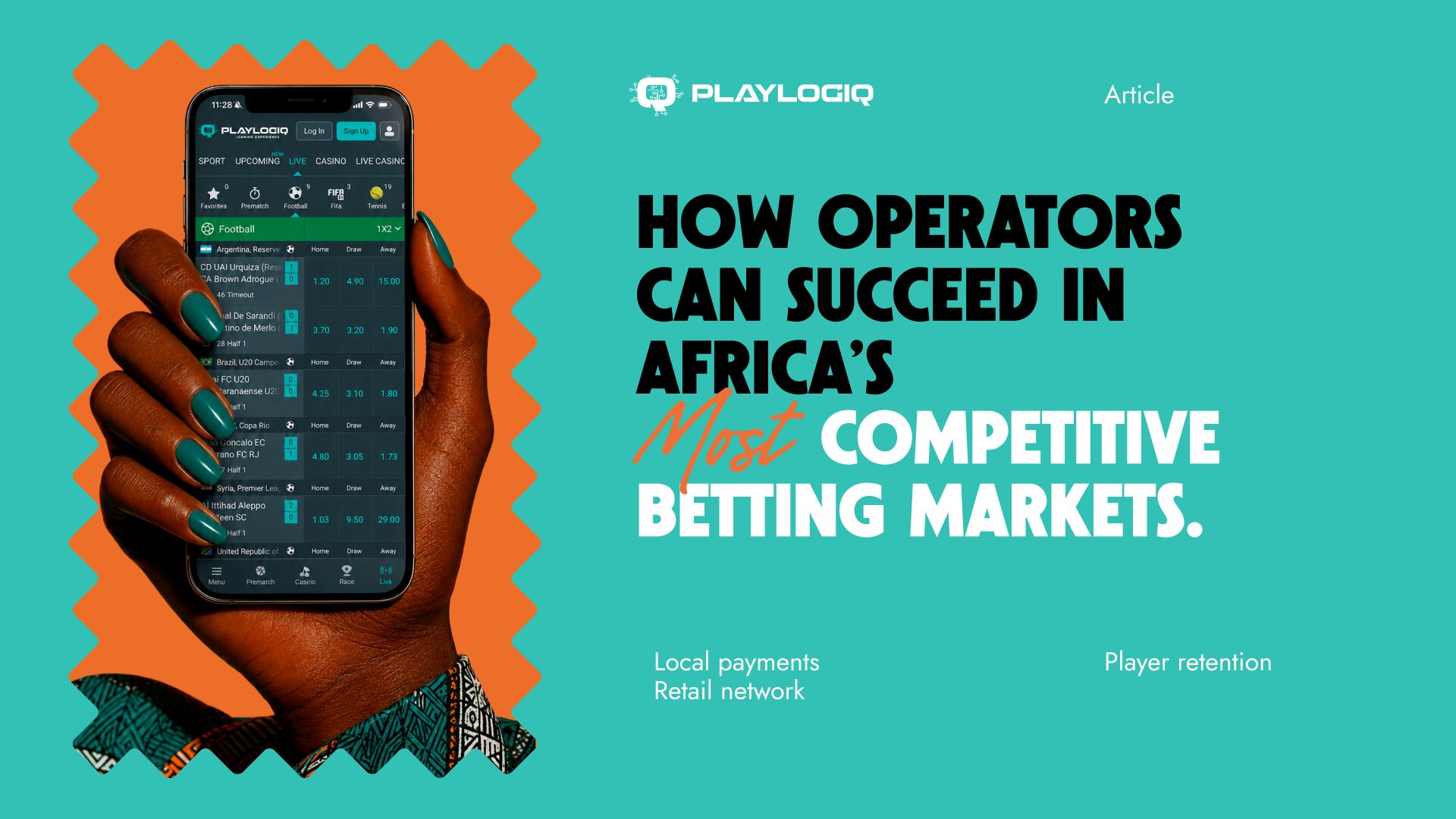



Not every operator that enters a competitive African market survives long enough to turn a profit. Yet some do, and they are not always the ones with the biggest budgets or the most recognizable brands. The difference rarely comes down to product alone. In the most competitive African betting markets, success depends on how well an operator understands local dynamics: how players deposit, how they engage, what keeps them coming back, and where the real barriers to entry lie. The operators who grow in these markets share one trait. They compete on execution, not just on what they offer. This article breaks down the factors that separate those who win from those who struggle, in markets where the competition is real, and the margin for error is thin.
What Makes an African Betting Market Truly Competitive?
A competitive African betting market is one where high operator density, experienced players with low switching costs, and strong incumbent infrastructure apply all at once — not simply a market with many brands.
When operators describe a market as “competitive,” they often mean one thing: too many brands chasing the same players. But in Africa, competition runs deeper than that. A truly competitive market combines several pressures at once: a high density of licensed operators, a player base that has already developed clear preferences, strong brand awareness for incumbent players, and infrastructure that rewards those who got there first.
The scale of the opportunity explains the crowding. The African gaming market stands at $2.29 billion in 2026 and is projected to reach $4.10 billion by 2031. Within that, Nigeria, the largest betting market on the continent, held 27.10% of the region’s 2025 revenue, while Kenya is pacing the continent with a projected CAGR close to 13%. These numbers attract operators. They also tell you why the competition in the leading markets is unlike anywhere else on the continent.
In practical terms, competing here means a new entrant cannot simply replicate what works elsewhere and expect traction. Players in mature African markets have been exposed to multiple operators and have learned to distinguish between platforms that deliver on their promises and those that do not. Payments that fail, slow withdrawals, or a clunky mobile experience are dealbreakers, not inconveniences. A competitive market also tends to attract stronger regulatory oversight, which raises the cost of entry and filters out operators who are not serious. That is not a bad thing. It creates a quality floor that pushes everyone to be better.
Why Kenya Remains One of Africa’s Toughest Markets
Kenya is the reference point for competitive iGaming in East Africa, and right now it is also one of the most complex regulatory environments on the continent. The Gambling Control Act 2025, signed into law in August 2025, replaced Kenya’s decades-old regulatory framework and established a new Gambling Regulatory Authority (GRA) to oversee all gambling activity in the country. The transition brought a moratorium on new license applications, tighter compliance requirements, mandatory local ownership thresholds, and real-time system integration with the regulator.
Beyond the regulatory shift, the market itself is unforgiving. As many as 83.9% of Kenyan adults have engaged in some form of betting, according to GeoPoll. That sounds like an opportunity until you realize it means the player base is highly experienced and has already been through multiple operators. M-Pesa is not just a payment option here. It is the baseline expectation, and any operator that cannot offer seamless mobile money integration is effectively invisible to most of the market.
Kenya has 205 active brands tracked by Blask, more than Nigeria’s 174, which points to a denser competitive field despite a smaller market by revenue. Acquiring a new player in this environment is expensive, precisely because switching costs are low. A better welcome offer, or a single bad experience, is enough to move someone.
Why Retail Still Matters in East Africa
One of the most underestimated competitive advantages in East African markets is the physical retail network. In Kenya, Uganda, and Tanzania, a significant share of betting activity still flows through shops, and this is not a transitional phase on the way to full digitalization. For many players, the shop is the preferred channel. It offers a social experience, cash handling, and a level of trust that a website or app cannot always replicate.
For operators who entered these markets early and built retail presence, this is a structural moat. Replicating a network of thousands of branded retail points takes years and significant capital. A new entrant competing purely online is not competing on the same terrain. They are leaving a large portion of the addressable market untouched, and handing it to whoever was there first.
The most resilient operators in East Africa run both channels at once: a digital platform that handles mobile bettors, and a retail network that captures everyone else. In these markets, omnichannel is not a feature. It is a prerequisite for competing at scale. Operators who arrive thinking they can win on digital alone consistently underestimate how much volume is still moving through the shop floor.
How Taxation Is Changing the Competitive Landscape
Across several African markets, tax policy has become one of the most significant competitive variables, and it consistently favors established operators over new entrants. Kenya is the clearest example of this dynamic in motion.
The Finance Act 2025 introduced a 5% tax on player withdrawals and a 5% excise duty on deposits, replacing the previous 20% levy on net winnings. The structural effect is significant. Between July 2024 and March 2025, excise duty surged 24% to KSh 9.97 billion, driven by increased betting activity. More volume means more tax collected, but the burden is distributed unevenly. And the picture keeps shifting: the Finance Bill 2026, tabled in Parliament on 30 April 2026, proposes to reintroduce the 20% withholding tax on winnings and to expand the definition of what qualifies as a taxable transaction.
Large, established operators can spread compliance costs across a bigger player base and negotiate better commercial terms with suppliers. They already have the systems in place to manage real-time tax reporting, which the KRA now requires through direct integration with operator platforms. Smaller operators and new entrants are building those systems from scratch while competing on price at the same time. This creates a consolidating effect. Regulatory and tax complexity tend to reduce the number of viable operators over time and increase the advantage of those already holding market share. Understanding the full tax picture, not just licensing fees, is essential before committing to these markets.
Why Retention Beats Acquisition in Competitive Markets
In a market where every operator is running promotions and fighting for the same acquisition channels, the operators who win are usually the ones who lose players more slowly. Retention is not a secondary priority in competitive African markets. It is the primary growth lever, and the one most operators underinvest in.
Effective retention in Africa requires more than a loyalty program. It starts with genuine player segmentation: separating high-value players at risk of churning from casual bettors who respond to specific triggers, and from newly activated users who need a different onboarding path. Most operators are sitting on this data without acting on it. The practical move is to build a small number of automated lifecycle flows, such as a reactivation trigger for dormant players, a tailored journey for first-deposit users, and a retention offer tied to real behavior rather than blanket bonuses, then measure each one.
CRM tools and lifecycle management, implemented with the right local logic, deliver measurable improvements in reactivation rates and lower the cost of maintaining an active player base. Markets like Nigeria, where PlaylogiQ recently supported the launch of the BetCamp brand, show how much room still exists. Player volumes are substantial, but the average quality of CRM execution remains well below what the available data would allow. Acquiring players in a competitive African market will always be expensive. Keeping them, with the right infrastructure, does not have to be.
What It Takes to Win in African Betting Markets
Africa’s most competitive betting markets are not for operators looking for easy wins, but they are not impenetrable either. The operators who succeed share a clear playbook. They integrate the local payment methods players actually use, commit to both digital and retail channels instead of betting on one, treat regulatory and tax complexity as something to plan for rather than react to, and put retention infrastructure in place before scaling acquisition spend. None of these is a single big move. Together they are what separate operators who grow from those who stall. In markets this competitive, the right platform and the right local knowledge are not a differentiator. They are the entry ticket, and the operators who treat them that way are the ones still standing two years in. Operators weighing where to enter should also look beyond the crowded leaders: several emerging markets remain underserved and open to early movers.
FAQ
Which African betting markets are the most competitive?
Kenya and Nigeria are Africa’s most competitive betting markets. Kenya tracks 205 active brands with betting participation above 80% of adults, while Nigeria leads by revenue with sports-betting gross win near $1.6 billion in 2025. High operator density, experienced players, and low switching costs drive the competition in both.
Why does retention matter more than acquisition in competitive African betting markets?
Because acquisition channels are crowded and expensive, the operators who grow are the ones who lose players more slowly. Player segmentation, automated lifecycle flows, and behavior-based offers reduce churn and lower the cost of keeping players active, which makes retention the primary growth lever rather than a secondary one.
Do physical betting shops still matter in East Africa?
Yes. In Kenya, Uganda, and Tanzania, a large share of betting still flows through retail shops, which offer cash handling, a social experience, and a level of trust apps cannot fully replicate. Building a branded retail network takes years, so it remains a structural advantage for operators who arrived early.